


For the first time since Sweden joined Nato in 2024, Sweden welcomed the Nato foreign ministers on the 21st and 22nd of May in Helsingborg. The Youth Atlantic Treaty Association (Yata) Sweden invited students and other participants to attend the Youth Atlantic Forum on 21 May.
Students from Malmö and Lund University got to hear Nato Deputy Secretary General Radmila Shekerinska speak about the importance of Sweden in Nato as well as current challenges and threats for Europe. Later, two panel discussions were held about the future of Nato, the decisiveness of Europe, social resilience and total defence. Students had the chance to ask questions and engage directly with the experts.
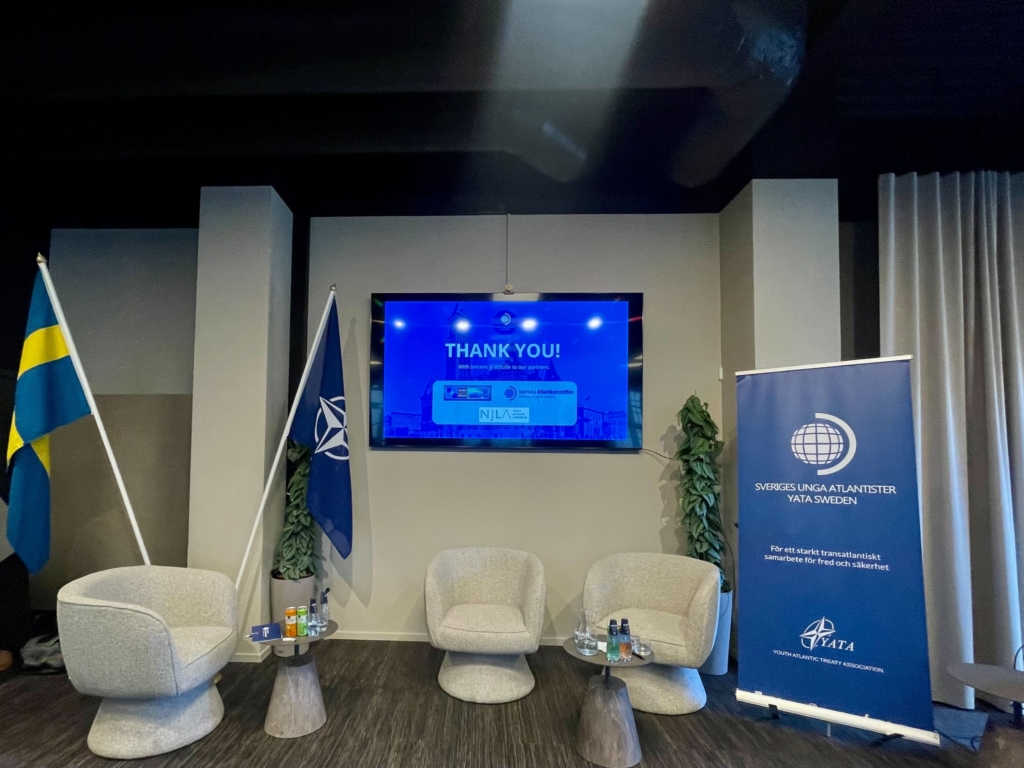
Yata Sweden opened the day by welcoming the audience and announcing the speakers. Nato Deputy Secretary General Radmila Shekerinska was the keynote speaker of the day. She emphasised the importance of youth and expert dialogue in shaping Nato’s priorities. She highlighted Helsingborg as an important location for the alliance. According to her, Helsingborg and Sweden are the “gates connecting the Baltics with the Atlantic”.
She summarised key points of the ministerial meeting: Arctic and Baltic security and support for Ukraine under the threat of Russia through a stronger Europe. Nato’s response includes increased defense spending from all member states, higher military production and a society “that is willing to take the challenge and persevere.”
After the audience had thanked her for her time the meeting continued with questions from the attendees.
The questions extended beyond the topics of the speech, addressing Nato’s broader strategic role. In response, Shekerinska highlighted Sweden’s strong support for the alliance and Ukraine, while noting that human resources remains a significant challenge, despite financial commitments among allies.
The final question focused on the speaker’s professional experience. When asked about the biggest challenge of her role, she emphasised the importance of “showing that our words lead to action”, while balancing the alliance’s immediate readiness and long-term security planning..
After the question round, participants had the opportunity to mingle. Students from Sweden, Ukraine, Bulgaria, Germany and France and connected over shared studies and interest in foreign affairs. The forum created a space for student exchange on youth perspectives on Nato.
Young People are the future
The second part continued with the first panel discussion moderated by Board Members of Yata Sweden. The three panelists were: Ann-Sofie Dahl, Associate Professor in International Politics and Senior Fellow at the Atlantic Council, Annicka Engblom, Chair of Swedish Atlantic Council and former Member of Parliament, and Mikkel Vedby Rasmussen, Professor in Political Science at the University of Copenhagen. The conversation focused on youth interest in defence planning challenges of Nato and different priorities among allies.
Showing knowledge in global affairs, the audience raised questions about Nato’s global security role: Will the EU develop an operational or supportive role to Nato? What is the importance of common values in an alliance with different priorities? Aside from Russia and Greenland, what about Nato’s security position in Iran, Ethiopia and Egypt, China and Taiwan?
The panelists praised and welcomed the students’ questions as insightful and engaging, repeatedly emphasising that “young people are the future”.
The final part of the forum was a second panel discussion with Aron Rosberg, Second Lieutenant in the Swedish Army and Board Member of Yata Sweden, and David Giesselsson Nord, Professor of Molecular Pathology and Vice Dean at the Faculty of Medicine at Lund University.
Professor Nord focused on the Swedish concept of total defence. He highlighted the role of universities when it comes to Swedish defence and security. According to Professor Nord, highly educated young people need to be part of comprehensive defence. Lieutenant Rosberg agreed, emphasising the relevance of such forums to foster dialogue between young participants and defence experts.
The speakers were broadly positive about Nato, and the forum included opportunities for questions and discussion from the audience. Students listened to key experts in defence and preparedness, asked questions and interacted directly with each other.
In contrast, the separate anti-Nato demonstration “Shut down NATO” held on Friday 22 May showed a critical view of the alliance. The demonstrators protested against increased Nato defence spending and expressed opposition to the alliance. According to the police force, the protesters disturbed the peace and were therefore shut down and detained, SVT reports.