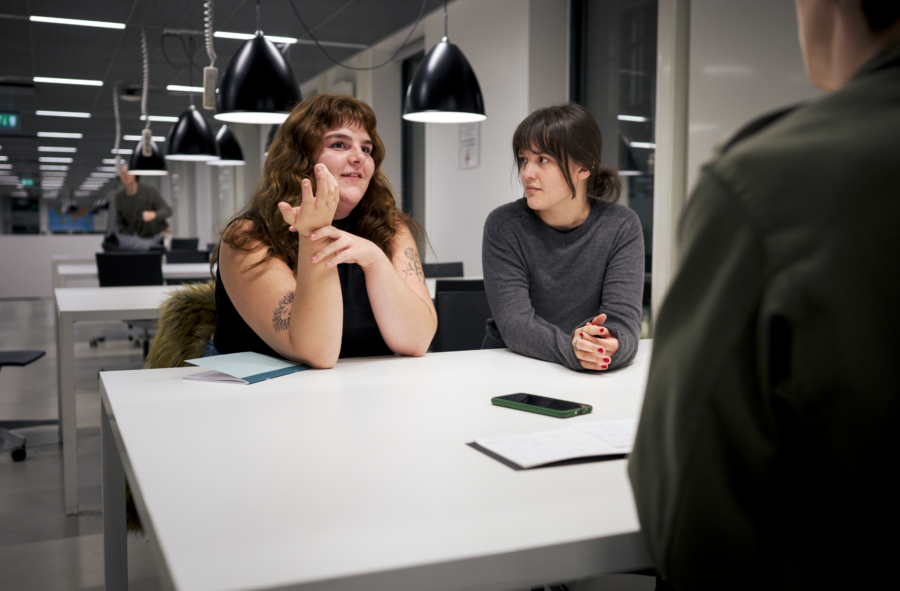


– My application was immediately deleted, like I wasn’t even considered, says Rebeca, a Brazilian in her twenties who lives in Lund.
Rebeca has a background in geography from Brazil, and later completed a bachelor’s degree in Global Humanities in Italy. After a few years in the social sciences, she realised she missed what she calls “that STEM part of me”.
To reconnect with the natural sciences, she set her sights on the undergraduate programme in Physical Geography and Ecosystem Science at Lund University (LU). When her application was automatically deleted due to missing study requirements, she reached out to antagning.se: “The level of mathematics you have been granted is 3b, the highest possible based on studies from Brazil”.
– Nobody who studied in Brazil can get more than Matematik 3b. No one who has been to high school in Brazil can study any natural science courses here.
When someone with a foreign upper‑secondary diploma applies to higher education in Sweden, their qualifications are interpreted in relation to standardised Swedish high school courses. The Swedish Council for Higher Education (UHR) provides tools and assessments that show what a foreign education corresponds to in Sweden. Universities and the central admissions service then use those equivalences to decide eligibility.
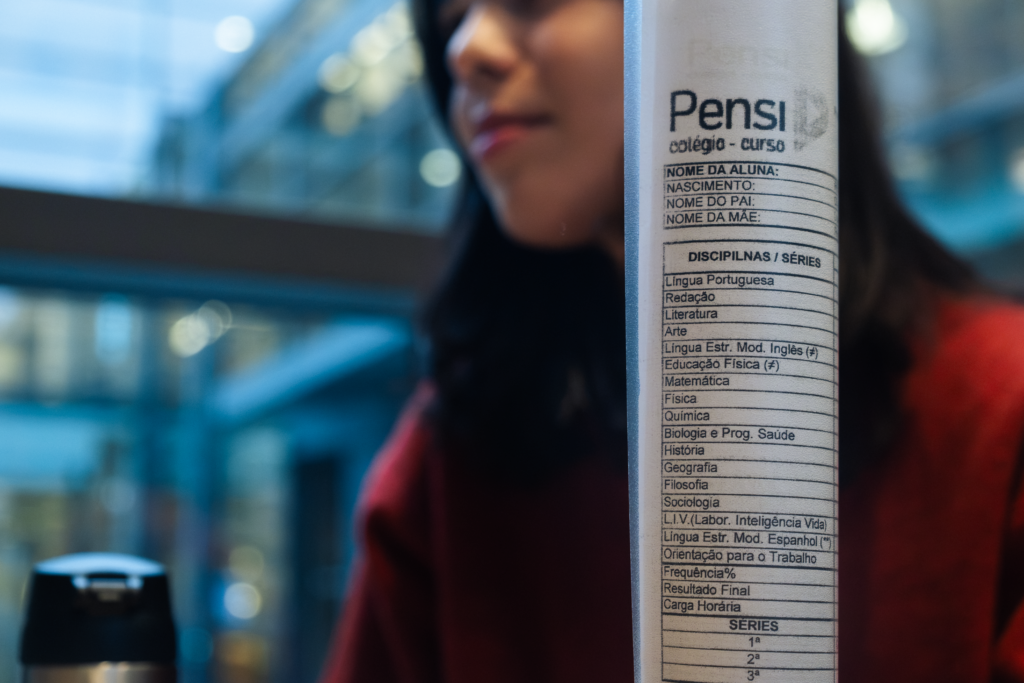
On paper, this looks neutral: every applicant, whether from Malmö or São Paulo, is checked against the same list of formal requirements. However, can a system built for equality at home truly recognise merit from abroad? Brazil has a unified high‑school curriculum where students do not choose classes as in Sweden. Everyone takes the same core subjects. The Swedish equivalence table caps Brazilian maths at Matematik 3b. Regardless of individual school quality, local variation or additional maths‑heavy content.
For Rebeca, the consequences are clear. When she wrote to the natural science department to explain that she had already studied geography at university level in Brazil, the answer was polite but firm. The programme is “very heavy on math and calculations”, and they make no exceptions to the Matematik 4 requirement. Neither the university admissions department nor the UHR was interested in speaking to Lundagård.
– I don’t think the system is capable of fully judging my education, it varies so much by region, by city, and by whether you went to public school or private school. This sort of mechanical way of judging students’ qualifications does not really work very well, says Rebeca.
The obvious follow‑up question is whether it is possible to complete that missing course. For students who completed Swedish upper‑secondary school, the standard answer is Komvux, municipal adult education intended for those who need to supplement or complete upper‑secondary studies.

– Swedish students have alternatives. You didn’t take this one course in high school, or you didn’t get the grades. You can take Komvux. You’re not locked in a box, says Rebeca.
This option is structurally harder to access for migrants in her situation. Komvux is organised by municipalities, is normally taught in Swedish, and is aimed at residents who already live in Sweden. There is no separate residence‑permit category for people from outside the EU who want to move to Sweden just to take a single Komvux course. As a result, Komvux presupposes that you are already resident in a Swedish municipality and know enough Swedish to follow the teaching.
Rebeca explicitly asked whether she could demonstrate the required knowledge in another way.
– Maybe I could take a test by the faculty, or maybe I could take an external test, just to prove that I know the content, she suggested.
The answer was negative. The current framework is built on completed and documented courses, not on individual subject tests as an alternative route to eligibility. UHR’s own information stresses that universities make the final decisions regarding eligibility, but it does not offer a generalised testing route for applicants with foreign qualifications.
The system is also difficult to read from the outside. Rebeca only found out how her education had been classified when her application was removed.
– They are not very transparent on the website about how they are going to convert foreign courses to Swedish courses, which is why I was surprised, she says.
There is also the question of support. Universities often have study and career advisers who can guide students within the Swedish system, and Komvux offers individual study plans for those already in the municipality. For migrants with foreign degrees, however, much of the navigation has to be done before they ever meet a local adviser.
Personally, Rebeca tried to adapt. She has applied for a master’s in social scientific data analysis in the hope that it will give her some of the quantitative work she misses after not being able to study geography. But the experience has changed how she sees Swedish academia.
– First, I was very disappointed. I really wanted this. Then I was just outraged at how the system is set. It definitely made me feel less welcome.
Her younger sister is finishing high school in Brazil and asking about studying abroad.
– I have to tell her, no, you can only study the social sciences or arts, because this Swedish public institution says that your education is not good enough, she says.
What Rebeca is asking for is not a dismantling of entry requirements, but more than one way to meet them.
– I would like to prove that knowledge in some other way. Even if my education did not meet those requirements, I can still open up a book and study on my own. I would like the chance to study, learn the material they need me to know, and just prove that I know it.
Artikeln publicerades först i Lundagård #2 2026. Läs hela tidningen i digitalt format här.