
This is a review. The author is responsible for opinions expressed in the article.
Show: Lead Children
Director: Maciej Pieprzyca
Premiere: 11 February 2026
Where to watch: Netflix
Set in communist Poland during the 1970s, the new Netflix mini-series Lead Children recounts the story of a classified epidemic of lead poisoning from a smelter in the city of Szopienice. The central figure of the story is Jolanta Wadowska-Król, a doctor in a local clinic who discovers the mass outbreak of the metallurgists’ occupational disease.
Lead Children has the atmosphere of a crime story and the tension of a thriller. Despite some unnecessarily long storylines which slow down the action, the plot is intense. The dystopian reality of the Polish People’s Republic (PPR) sets the stage for a weirdly nostalgic, yet chilling story filled with conspiracies and secret agents. When Dr. Jolanta Wadowska-Król discovers that children with lead poisoning are hidden around different hospitals to preserve the good image of the smelter in Szopienice, she is told that ”sometimes, the truth is inconvenient”– the intention seemingly being to defer tragedy by ignoring it.
The smelter provided employment, a scrap of certainty for people who had nothing to rely on. It seemed to serve its purpose: Putting food on their tables along with the toxic chemicals in their lungs. Lead Children is a story of childhoods lost to a system that prioritized productivity over human lives.
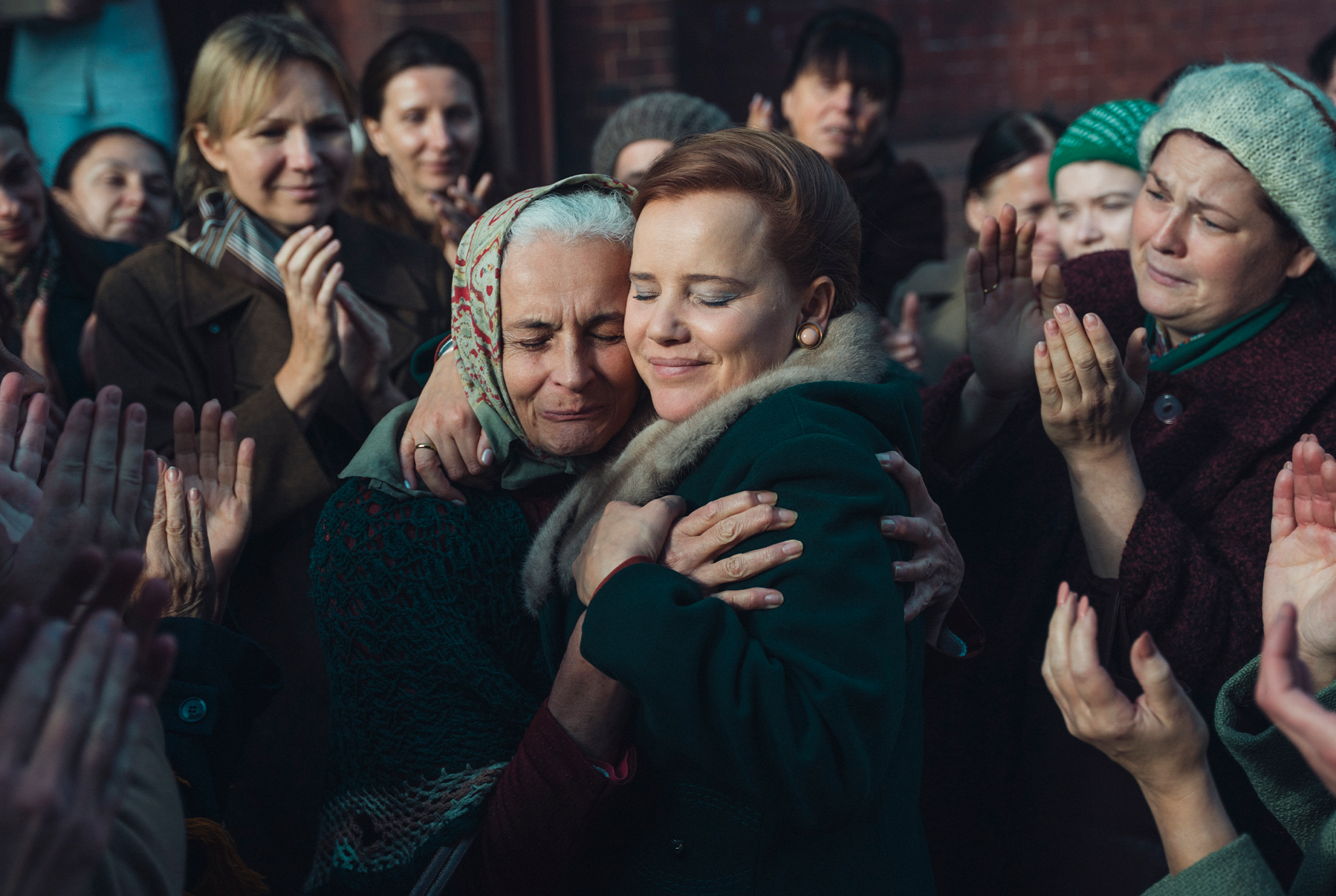
Dr. Jolanta Wadowska-Król is a classic heroine trapped in a man’s world. In order to be taken seriously, she takes on the role of the wife, the mother, the healer, the female Prometheus. All that with a polite smile, an elegant dress, heels, makeup, and a polished hairstyle. Joanna Kulig, who plays Dr. Wadowska-Król, is able to perfectly portray the doggedness of the main heroine with her characteristic intense stare.
The story of the lead children still feels relevant today.
The action of Lead Children takes place on two levels: The exclusive communist paradise, and the world of the common people, where everything seems scarce. ”So long as they continued to work and breed, their other activities were without importance”, George Orwell writes in his dystopian novel 1984, describing the lowest caste of the fictional totalitarian state. The working class in the PPR was treated by the communist regime in much the same way: ”We’re born, then we work, we pass away”, says nurse Wiesia to Dr. Wadowska-Król.
The actors in Lead Children look like they actually belong in the 1970s, which is seldom the case in historical dramas anymore. The historically accurate scenography and costumes sustain the illusion of the period piece. What somewhat ruins the fantasy is the rather dated CGI effects. The layer of pollution particles in the air in most scenes looks like a Snapchat filter, and the animated long shots of the industrial neighborhood resemble video game graphics.
Polish cinematographic productions have a tendency to lean towards the theatrical. The acting feels more tense, dialogues artificial, and reactions exaggerated. While decorum is necessery for the subjetmatter, Lead Children still benefits from this theatricality.
The story of the lead children still feels relevant today. There is more than air pollution to poison a childhood, and other regimes to redefine what makes life livable.
The article was first published in Lundagård #2 2026. Read the paper online here.