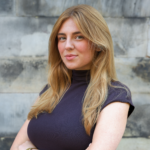
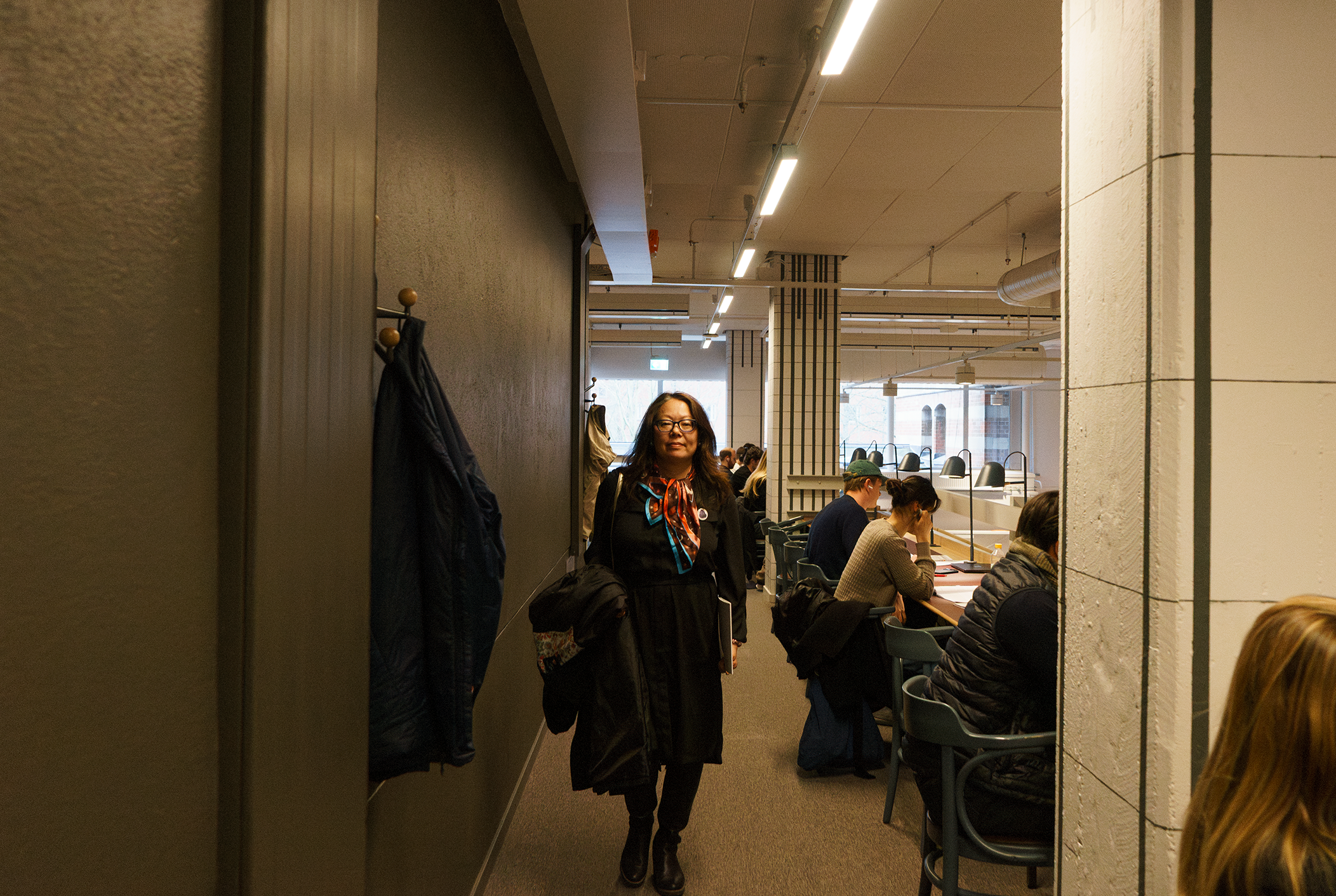
Maria McCauley is the director of the Cambridge Public Library in Massachusetts. This summer, she takes over as the president of the American Library Association (ALA): The world’s oldest and largest library organisation. She came to Sweden as a keynote speaker at the Swedish Library Association’s political summit, visiting libraries in Stockholm, Lund and Malmö along the way.
— A lot of what I do is to explore the role of libraries in society, in advancing our democracy. We want to continue to be a centre of civic life, to help with the research enterprise, and to help people learn and thrive, she says.
That mission, she argues, is now under direct attack. ALA data shows that 72% of censorship demands now come not from individual parents but from organised pressure groups and government bodies, circulating lists of titles to be removed from shelves across the country. The books targeted are disproportionately written by women, LGBTQ people and people of colour, and they disproportionately deal with race, sexuality, gender and history.
— Over the past few years, we have seen a real agenda of special interest groups who are demanding that specific titles get removed from shelves.
to keep aiding research and be a part of civic life.
Photo: Erik Norinder
She pauses, then gets to the heart of the issue.
— I think it is a real question about our freedom, our freedom of expression, and also our human rights. Is it for everybody to choose what they want to read and explore for themselves? Or is it that a small group of people are deciding for others? What is this really about? Is it specifically about trying to control content? Or is it another agenda of trying to chip away at some of the foundations of our democracy?
At the state level, approximately 60 adverse library bills are currently moving through legislatures, primarily in Iowa, Texas and Florida. Some question the professional authority of librarians to build their own collections. Others go much further, threatening legal consequences for individual library workers who refuse to comply. At the federal level, a bill known as HR 7661 would restrict all literature deemed sexually explicit for anyone under 18, a definition so broad that McCauley considers it a fundamental threat to intellectual freedom.
— What is appropriate for a one-year-old is very different from an 18-year-old in high school, she says. It is very sweeping and broad, and that is damaging.
The Trump administration has dismissed book ban complaints as a hoax and eliminated the government position responsible for investigating censorship in schools. When the administration moved to dismantle the Institute of Museum and Library Services, the primary source of federal funding for libraries, the ALA took it to court. Twenty-one state attorneys general filed a separate lawsuit.
— I think that was very courageous, and it had a rallying effect. People in the general public said: We are not going to put up with this either. A lot of people came out and joined the campaign because they see this as an injustice.
The consequences for individual librarians have at times been severe. Some have lost their jobs for refusing to remove books. Others have faced harassment and threats. And there is a quieter, harder-to-see pressure too, librarians who simply stop buying certain books before anyone asks them to, out of fear.
— Part of the education is making sure that everybody, including library workers and volunteers and board members, is trained up on the importance of intellectual freedom, and that they actually run through scenarios where they might be challenged and how they might handle that.
For McCauley, all of these points point to something larger than a dispute over books. Libraries are, she argues, one of the last genuinely public spaces, places that ask nothing of you when you walk in and give you access to the full range of human thought.
— This is a place where we can all come together, from all walks of life, to learn together and to have courageous conversations. That is a really important part of this moment in time, she says.
The connection to students at LU runs deeper than solidarity. Sweden’s research community is heavily dependent on American academic infrastructure. The Trump administration has terminated or frozen over 7,800 research grants since taking office, and proposed cuts to the NIH could amount to nearly 40% of its budget. For researchers and students at Swedish universities
according to Maria McCauley.
Photo: Erik Norinder
who rely on shared databases and international collaborations, the disruption is not theoretical.
— These federal actions and this very uncertain time are potentially affecting students in Swedish society. Telling that story matters, McCauley says.
There are, she says, reasons for cautious hope. Ten American states have now passed freedom to read legislation, protecting libraries from politically motivated removals. The public response to the ALA’s lawsuit showed that many Americans are paying attention.
— Through teaching, learning, knowledge creation and places for engagement, our libraries are advancing our democracy and helping our community members to become informed. Our libraries have that mix of resources and action that helps to advance our society and make our world a more humane place, where people appreciate each other more.
Maria McCauley begins her term as ALA President in June 2026.