

This February, those enjoying an afternoon in the city may have witnessed thousands of students queueing outside AF-borgen. People had been waiting in the cold for hours, some even brought tents, in the hopes of becoming a volunteer for this year’s Lundakarneval: Celestialkarnevalen (Celestial Carnival). The Lund Carnival is one of Lunds many student traditions, and every fourth year students transform the city into a festival ground with a parade, spex, music and tents. This year, a record number of 8,700 carnivalists are participating.
A Farmers’ Wedding and 175 Years of Tradition
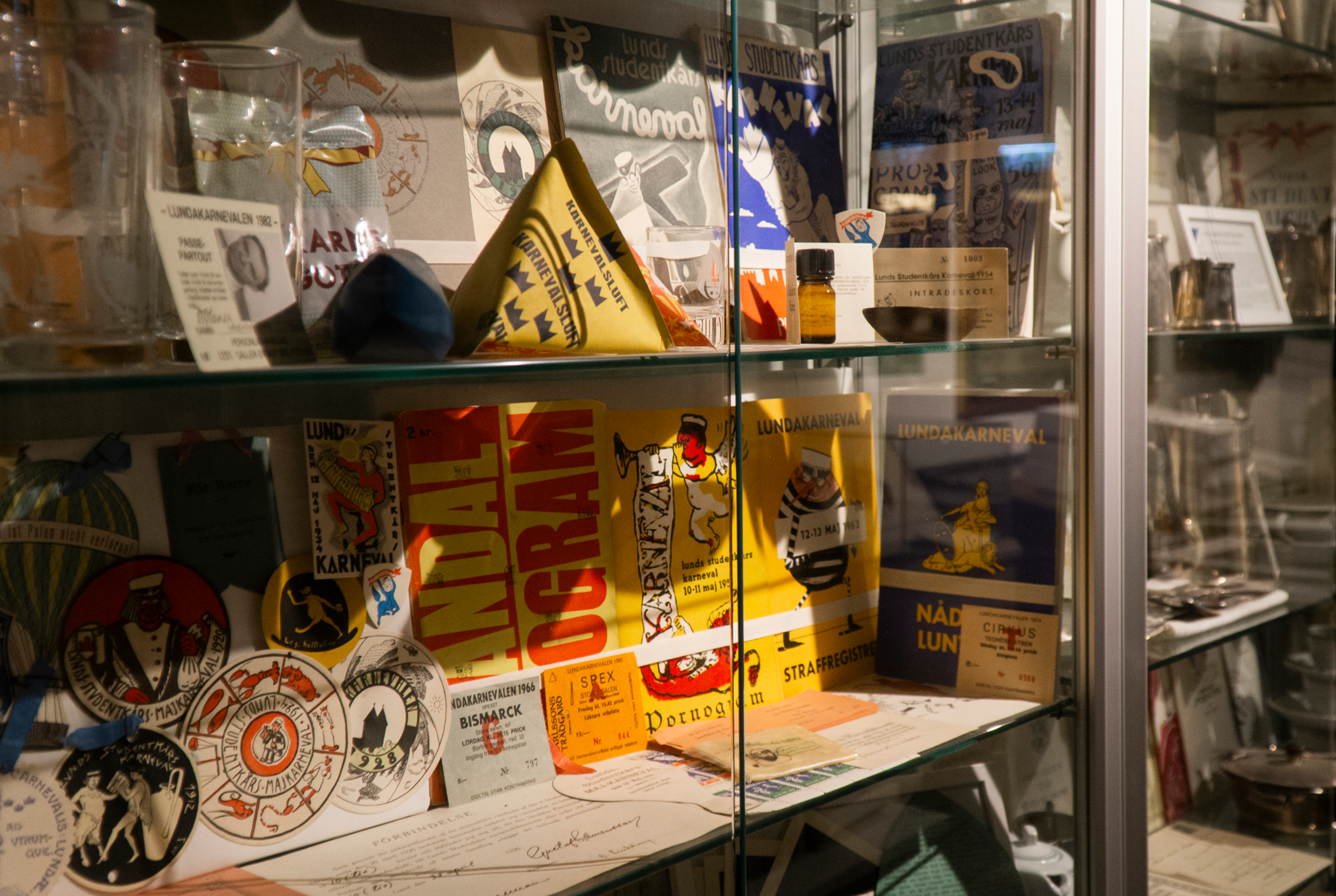
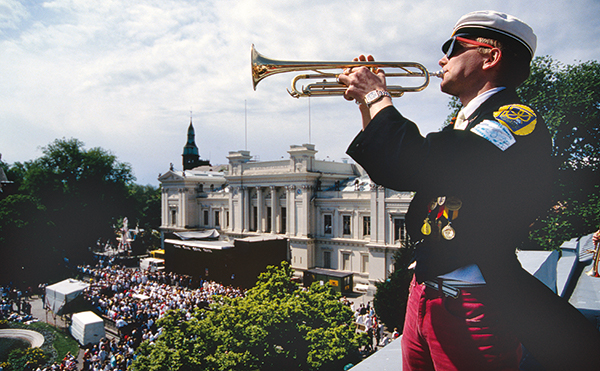
The first officially recognised student carnival took place in 1849, when students from Smålands nation dressed up and imitated a wedding parade. The first carnival with an official theme was held in 1863: Grekiska Thronens försäljning (The Sale of the Greek Throne). After Lund’s student union was formally established in 1867, it took on the responsibility for organising the event, at first annually, then every other year. Over the years, the carnival has transformed into a massive event, attracting about half a million visitors to its most recent editions.
The four-year rhythm that defines the carnival today was not a deliberate decision, but rather born of excess. In 1892, the celebrations descended into such serious carousing that the local authorities intervened, and the planned 1894 carnival was cancelled. The four-year gap that resulted has remained in place ever since, interrupted only by the World Wars and the economic crisis of the 1930s.
Fredrik Tersmeden, student life expert and archivist at Lund University, sees the four-year interval not as an arbitrary quirk of history, but as central to the carnival’s survival:
– To have it even less frequently would mean that a lot of students wouldn’t be able to have at least one carnival during their student years. That would be a shame. You couldn’t do it more often, given how large the organisation is.
A Reflection of its Time
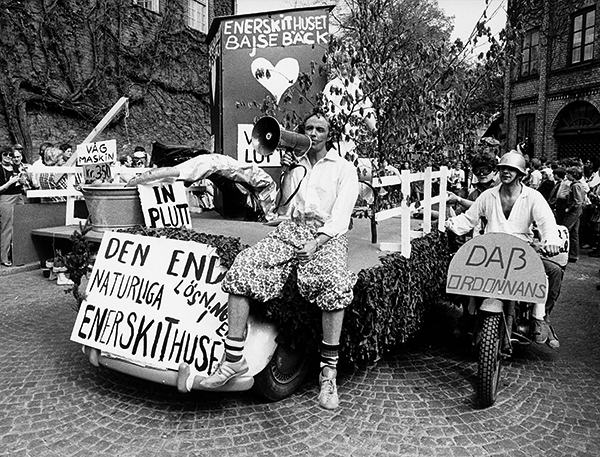
The format of the carnival has remained largely the same for over a century, while the content has always been new and thematic. Carnival themes have reflected the events of their era, from Den Grekiska Tronens Försäljning (The Sale of the Greek Throne) in 1863 to Tredje rikets dag (The Third Reich) in 1934 to Katastrofalkarnevalen (The Catastrophic Carnival) in 2022. Tersmeden puts it simply:
– The carnival mirrors our time in a humorous way.
Since 1954, the themes have almost always ended in “-al” to rhyme with karneval, from Skandalkarneval to this year’s Celestialkarneval.
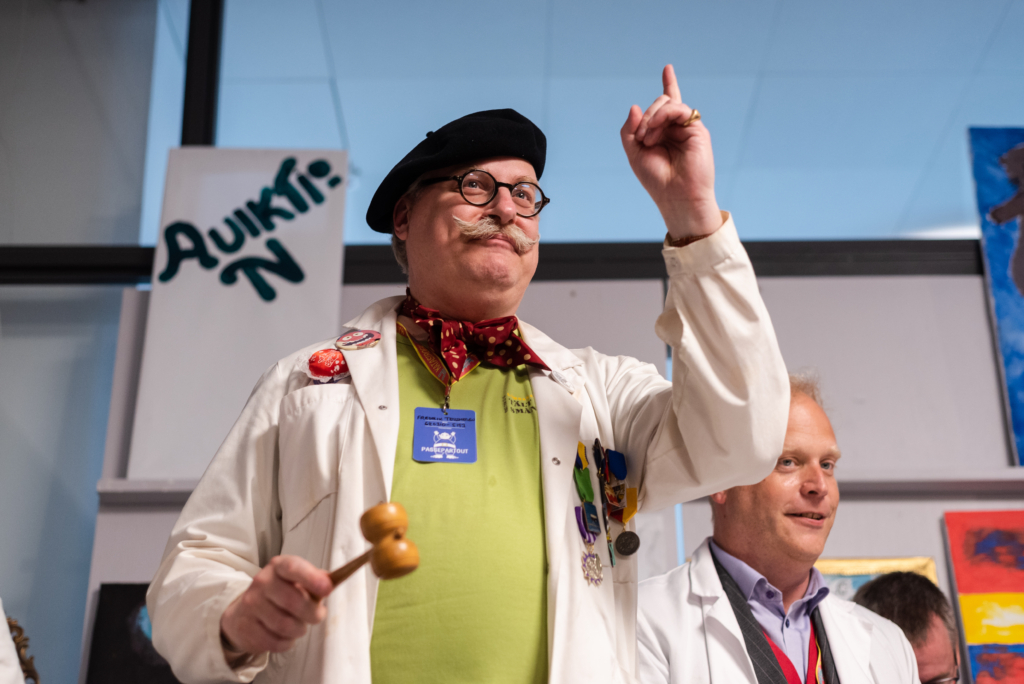
This satirical impulse has occasionally led to controversy. Fredrik Tersmeden recalls a scandal as far back as 1865, when a student parody of a popular song written in response to Abraham Lincoln’s assassination drew national outrage, with newspapers in Stockholm accusing the carnival of celebrating the murder of “the liberator of the slaves”. More recently, a blackface incident at a student nation the year before the 2014 carnival prompted the university’s vice chancellor to impose a formal ”humour policy” requiring the carnival committee to vet and approve all scripts. This policy has since been lifted.
– Today we rely on common sense again, Tersmeden says.
Though he adds, with a wry smile, that he hopes someone will still be offended.
– That’s a part of it. The carnival is supposed to mock contemporary happenings: politicians, trends, celebrities, everything.
The Secret to its Survival
No other Swedish university has a carnival quite like Lund’s, and Fredrik Tersmeden has a clear theory as to why. The answer, he argues, lies not in the carnival itself, but in Akademiska föreningen (the Academic Society), the student organisation that has united students from all faculties and nations since the 1830s.
– In Uppsala, Stockholm and Gothenburg, they are much more divided. But in Lund, we learned to do large things together, students from all nations, from all faculties. That’s why we have these large spex groups as well. We have this tradition of doing large projects together with students from all parts of the university.
The carnival has also evolved in terms of who does the work. Where travelling professionals once set up carousels and fairground stalls, today almost everything is built and run by the students themselves.
– There are virtually no professionals anymore, except for the artists playing music.
The First Female Carnival General
The 2014 event marked a milestone in the carnivals long history: For the first time, it was led by a woman. Fanny Ramel had been involved since the 2010 edition, starting as head of the carnival film before joining the committee in 2014, driven by a desire to be as close to the centre of things as possible.
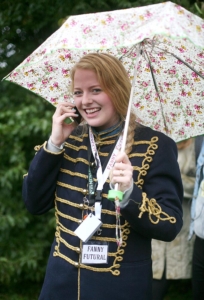
general. Photo: Lukas Norrsel.
– My ambition was always to be as involved as I could be, because I thought it was so much fun.
Her guiding philosophy as general was borrowed from a book by Per Eliasson, a former carnival general from 1994, titled Management by Glädje (Management by Joy).
– How do I get 5,000 or 7,000 people to engage their time and energy into this? Joy was the answer.
That philosophy shaped everything, from how Ramel ran the committee to how she thought about the relationship between ambition and fun. It is a balance she carries with her today, as she now works as a producer at Malmö Opera.
– You can have a really safe carnival, but it can still be really, really fun. You don’t have to suffer to achieve greatness.
What to Expect If You’re New to All This
Each new carnival comes with different merch and carnival-themed items. During the carnival weekend, a large parade marches through the city centre, and visitors get to enjoy different shows, entertainment and food. Beyond the carnival grounds, the carnival has its own spex, movie, and even several kinds of karnevöl – beer brewed specifically for the carnival. The brewery, Brygghuset Finn, has been producing Skåne-brewed carnival beer since Futuralkarnevalen in 2014.
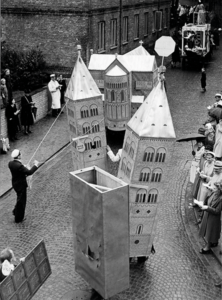
Lindström/AF-s arkiv
While the carnival is generally filled with merriment, the grandeur of the festivities historically has resulted in several delinquencies. On the first carnival night in 2014, six people were taken into custody on counts of drunkenness and assault. Ahead of the 2022 carnival, police issued a warning for carnivalists to be careful as theft, vandalism and assault are commonly reported during the festivities. In spite of this the magic of the Lund Carnival has the city under its spell, months before it officially begins. It is an a feeling that is hard to put into words. Fredrik Tersmeden’s summerises it simply:
– Organised chaos.
This article was first published in Lundagård #4 2026. Read the paper in full here.