This is an opinon piece in Lundagård. The opinions expressed are the writers own.
I have still not fully unpacked my bags or completed my paperwork. I don’t know where the outlet for my phone charger is, or where I’m supposed to hang my clothes. Instead, I have spent every waking moment outside the house, walking aimlessly to try to get settled. I walk all hours, from the break of dawn into the late evening, and have come across a lot of different people, ranging from friendly to threatening.
No matter the person, the interactions have been marked by a unique sensation: complete anonymity. I have realised that I can choose to be whatever is most beneficial.
The first time I realised this was at Köln central station. Even though I was juggling several suitcases and a map in my hands, an even more lost group of people asked me for directions. It seemed they had confused me for a native, even though I am nothing of the sort. I had a choice to make: either I could be the person they wanted me to be, or I could let them down. After a brief glance at my map, I made my decision and pointed them westward, ordering them to walk until the city looked different, whatever that meant.
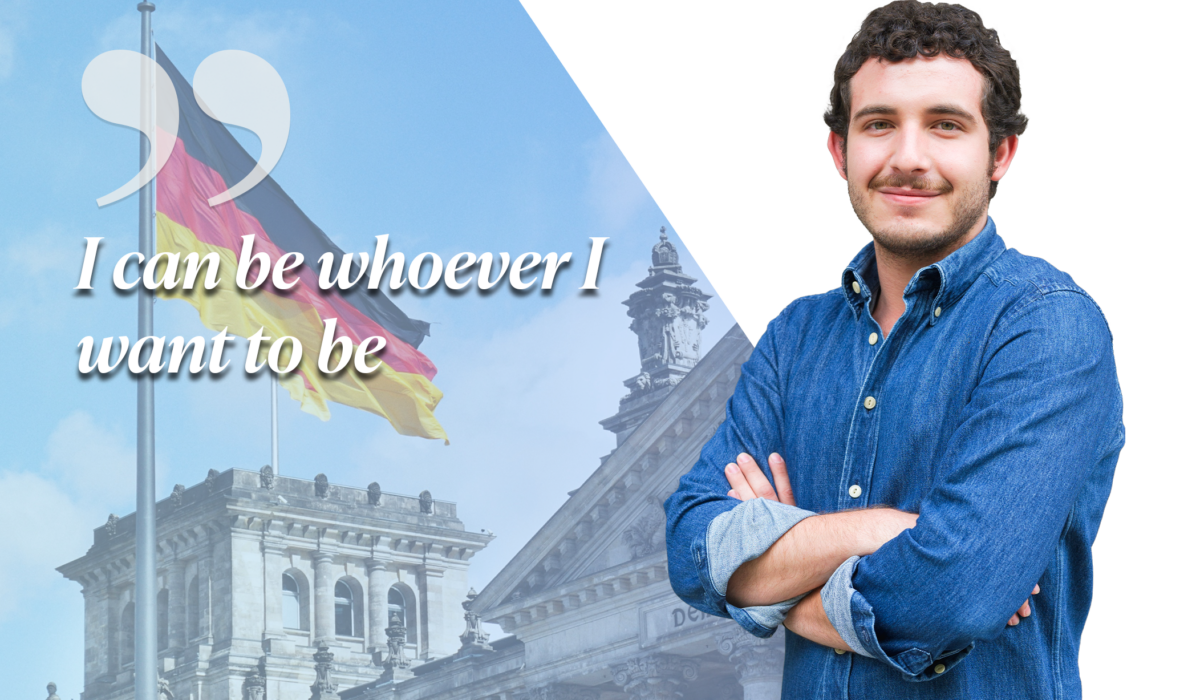
I can be whoever I want to be
It isn’t always easy to decipher who people need me to be, though. I am still trying to figure out what my landlord is expecting of me. Her daughter, who’s my age, has just left home, and I’ve moved into her bedroom; maybe I’m filling an empty nest? I work through the portraits on the wall and the stickers on the fridge like a detective, trying to find clues about who she is. Her LinkedIn was quite vague. She’s told me she’s into techno, but she hasn’t played me anything yet. She asked if I was vegetarian while showing me the fridge, in a tone that didn’t reveal her own status. I hold back when she asks my opinions on the news.
Sometimes, the choice of who you will be is out of your hands. On a very irresponsible solo late-night walk through the hip district of Ehrenfeld, I was approached by a wide array of drunk people. What I had to be to any of them, to stay safe, to make small talk, or to remain unarrested, varied. To the drunk, bald men in bomber jackets, I was a Swede. To the friendly kiosk owner I bought copious amounts of German soda from, I was a fellow Brazilian. To the patrons of the punk bar my East German friends recommended, I was a socially conscious photographer. And to the cops who checked my bag of empty clinking bottles on the way home, I was not a drunk, just an over-sugared soda drinker.
All of these characters are different aspects of my being, none of them a lie. Here, on my exchange, I am free to reveal parts of me when needed to keep myself safe, interesting, and included in a city that has no idea who I am. I can be whoever I want to be, and pretend that it’s who the person opposite wants me to be. It’s all just a fun excuse to play dress-up. For the moment, I am no one to these Germans, and that’s liberating.