
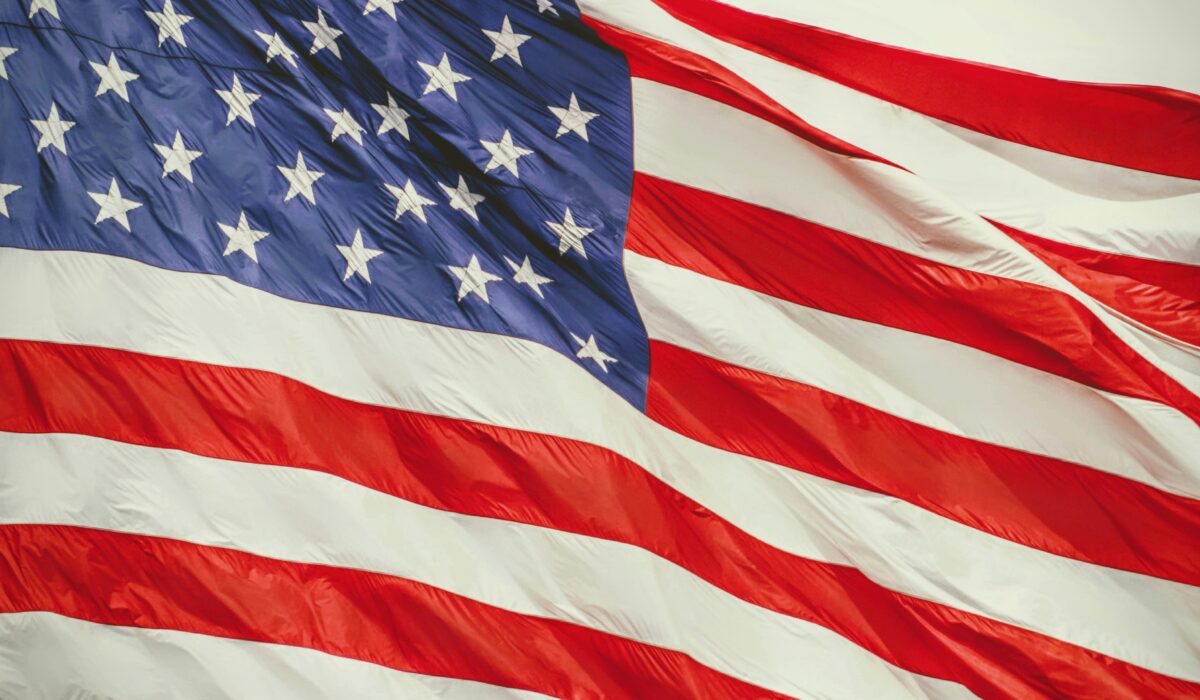
On November 3, the United States will hold its midterm elections. The election could bring about changes in the country, as a shift in the control of Congress seems highly likely.
At midterm elections, Americans elect members of Congress. A key task of Congress is to create and pass federal laws. Congress includes both the House of Representatives and the Senate. All 435 members of the House, the lower chamber of Congress where members introduce and debate proposed laws, will be elected to serve two-year terms. In the Senate, the upper chamber, 35 of 100 seats are up for election. Senators serve six-year terms. Their responsibilities include approving or blocking proposed laws received from the House. Currently, Republicans have a majority in both the House and the Senate.
Additionally, 34 states elect their governors – state-level politicians – at the midterms. Governor contests in California, Florida, and Michigan will be among the most closely watched.
Recent polling suggests that the Democrats hold an advantage. Approval ratings for President Donald Trump are at an all-time low, with 66 per cent of Americans disapproving of his performance.
According to the BBC, this is largely driven by widespread voter anxiety over the economy, as many struggle with the price of everyday life and inflation remaining above the level targeted by the US Federal Reserve, partly due to the war in Iran. Democrats also argue that Trump’s trade war pushed up prices for Americans. More pressing questions include immigration, specifically Trump’s controversial curb on illegal immigrants, and concerns over AI.
Four American students share their opinions on the midterms
Emily Oberlender from New York, pursuing her master’s in Human Geography, thinks racist language and subsequent non-democratic forms of government are at stake in these elections.
– Dog whistle politics is a thing of the past. The US is no longer hiding really racist, discriminatory policies and prejudice through language. Right now, it is very blatant. So what’s at stake is if we want the country to be a dictatorship, an authoritarian, fascist government, or if we want to fight for democracy and a more equitable society, says Emily.
Paul Schoening from New Jersey is a master’s student in Human Geography. His main concern is continued Republican deadlock.
– Another two years of unrivaled Republican control of all branches of government, he says.
Erik Frederiksen, from Colorado, pursuing his master’s in Disaster Risk Management in Climate Change Adaptation, emphasizes rights and climate concerns.
– We’ve seen the current administration working to take away a lot of rights. We’ve only seen things ramping up with ICE deporting people. This is an opportunity to slow some of the regulations that Trump has repealed and get back on track with, like, the electric vehicle tax, says Paul.
Hannah Frisch, from Massachusetts, studying her master’s in International Development and Management, describes how ”crazy” American politics has gotten and how it is affecting her in Sweden.
– My parents and friends back home are always talking about it, given all the chaos that is always happening. International students always want to talk to the Americans, Emily says.
– It is a constant conversation even though I am not at home, she continues.
Emily explains how it is difficult to be politically active abroad.
– The country is introducing a lot of practices making it more difficult to vote from abroad. In my state, New York, you need to physically send in your ballot by mail, which can be very cumbersome, says Emily.
– It is not really designed for a popular vote to shine through, and it’s not designed for people to have access to vote. It’s very much designed to only allow people in power to maintain power, she continues.
The issues that are the most important to the students we talk to in this election reflect those of the American left: immigration, women’s rights, climate change, and persistent inflation.
Emily elaborates on women’s issues.
– I think this election is very much a response to the Epstein files and a response to so many politicians and public figures being known child predators and known assaulters, she says.
Paul emphasizes human rights and anti-imperialism.
– Immigrant rights are very important to me, says Paul.
Erik, a former public-school teacher, stresses education.
– I saw how it was becoming harder and harder to teach. We could see the effects of the taking away of funding from education, says Erik.
– There are a lot of lawsuits against our district. We had a gender neutral bathroom at one school, and the entire district got sued, taking away even more funding, he continues.
Ever-present issues in American politics, like healthcare, food stamps, and gun control, are also of concern for the students.
The students do not feel confident in American democratic institutions.
– I don’t really believe that America is a democracy. I would call it a fascist state at this point. Because of the two-party system, I don’t think that there’s really any choice we have as voters. When you look at the actual breakdown in the voting patterns of the Republican and Democratic parties, they’re in a lot of ways two sides of the same coin, says Paul.
Paul describes losing confidence in state institutions. He mentions the Supreme Court and the famous overturning of Roe v. Wade that fundamentally changed Americans’ right to abortion.
– It doesn’t feel like we can rely on all the branches of government. I also think there are a lot of things that Trump is doing that are blatantly against his constitutional power, and no one is checking it because there are no checks and balances as we are designed in the Constitution; it makes me extremely worried.
The students’ predictions of the election results are mixed.
– I think we will see the pendulum swing, says Emily.
– I think either way, we’ll see a lot of what we’ve been seeing the last two years. Even when the democrats are in power, they don’t really do much, says Paul.
– I think we’ll see a lot more challenges to people’s individual rights. I think Trump will be more bold and brazen because he will be a lame-duck president, says Erik.
– If the Democrats don’t win in both chambers, I think we’ll just continue to see Trump do things unchecked, says Hannah.
– If the Democrats take over, I do have fears they’ll impeach him again; it’ll become tit-for-tat, she continues.