
This is an opinon piece in Lundagård. The opinions expressed are the writers own.
The mere-exposure effect explains how people develop affection based only on familiarity and repetition. This effect makes us grow affection for our routines, spaces, and most importantly, people. In my quest to integrate into German society as quickly as possible, I have outlined a few spaces where the mere-exposure effect would play to my advantage. The least exciting, but most successful, strategy remains the same: just keep showing up.
I’ve had this crafts-cafe show up on my feed for a while now. I don’t personally consider myself a crafter, but my friends back in Lund do. And so I started to show up, with neither yarn in hand nor any knowledge of how to crochet.
My experience was mild at first. It turns out that focusing all of your energy on how to hold the crochet hook does not leave a lot of space for chit-chat. I looked on helplessly as the people besides me churned out row after row. Whatever conversations I had felt pitiful.
It’s been a few evenings at the crafts-cafe since then. I still don’t think I’m much of a crocheter at all. But I’ve been there enough times that now when there is someone new there, I am the one who gets to teach them their first stitches.
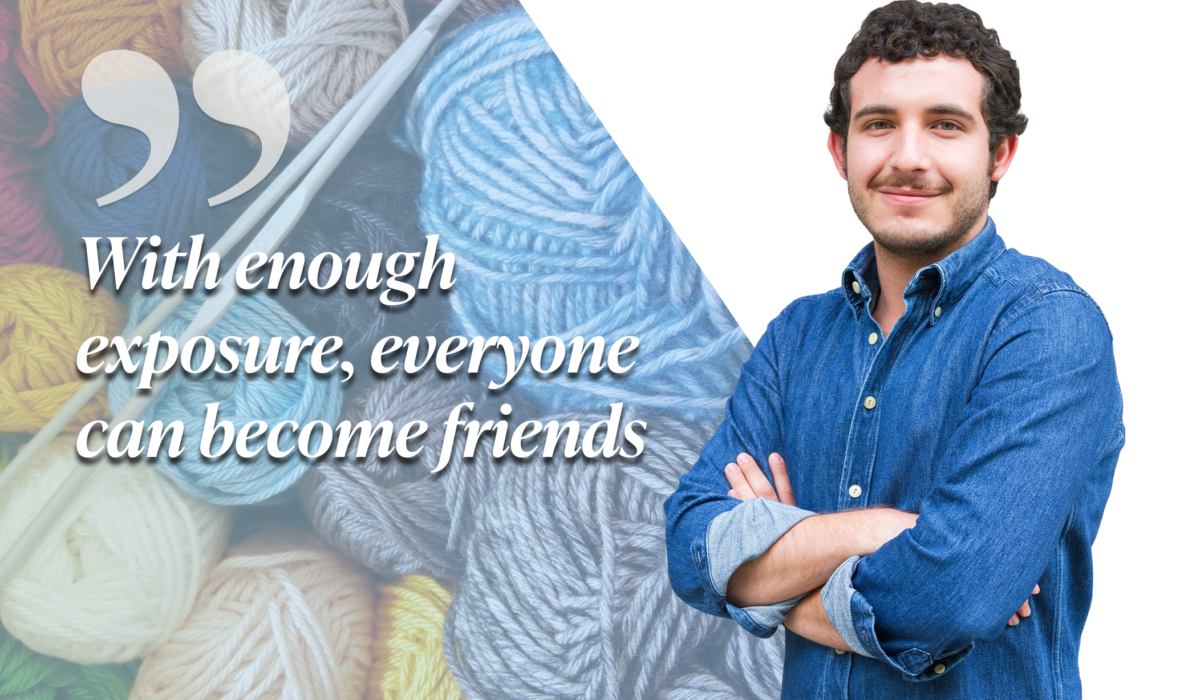
With enough exposure, everyone can become friends
Sometimes third spaces aren’t what you’d expect. I’ve made a friend at this bookstore I pass by on my walk to school everyday. They have a clearance basket on the street outside with photobooks for two euros, where I’ve picked up an irresponsible amount of volumes for someone that’s moving soon. The storeowner, naturally, is always there, and by now she’s grown to understand my taste. She brings me to the store’s basement to show me books she thinks I’ll like. She’s invited me to an exhibition of her drawings, and I think she might end up offering me a job there.
Even the people vary. There’s some familiarity within the ”closing crew” of the political science library. It started with a friendly nod, born from recognising each other. Then, one day when we were studying, someone tapped the library window beside me from the outside– it was one of the closing crew. It turned out, they’d forgotten their lighter. Naturally, everyone had a light on them. One thing led to another, and now we all take breaks together, where we do coordinated supply runs to the kiosk down the street;.
I would not have met all these people had I not kept just showing up. Our repeated interactions, through agency or circumstance, broke down all the social barriers. With enough exposure, everyone can become friends. Hopefully, more rituals and routines will push me to see more people, over and over again. It’s an unstoppable force.