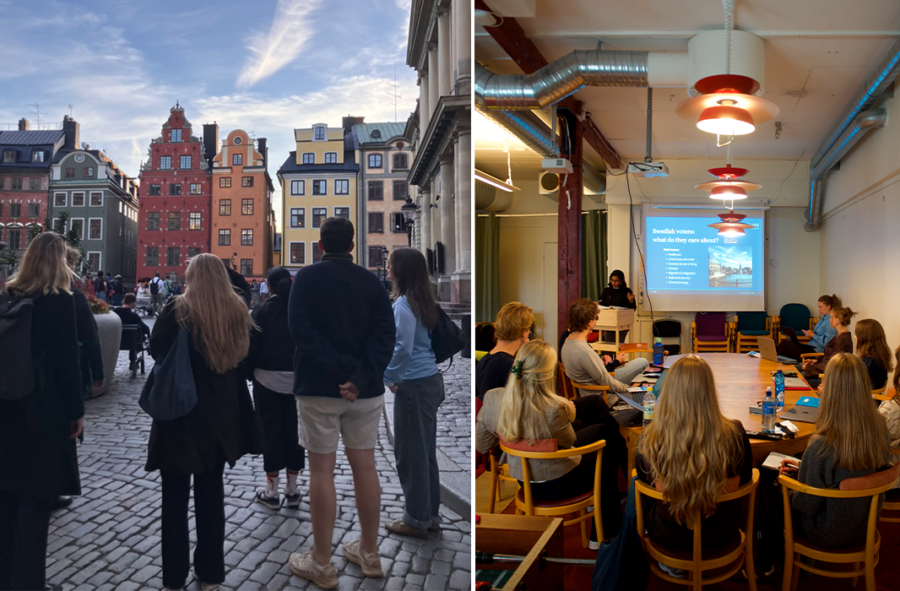

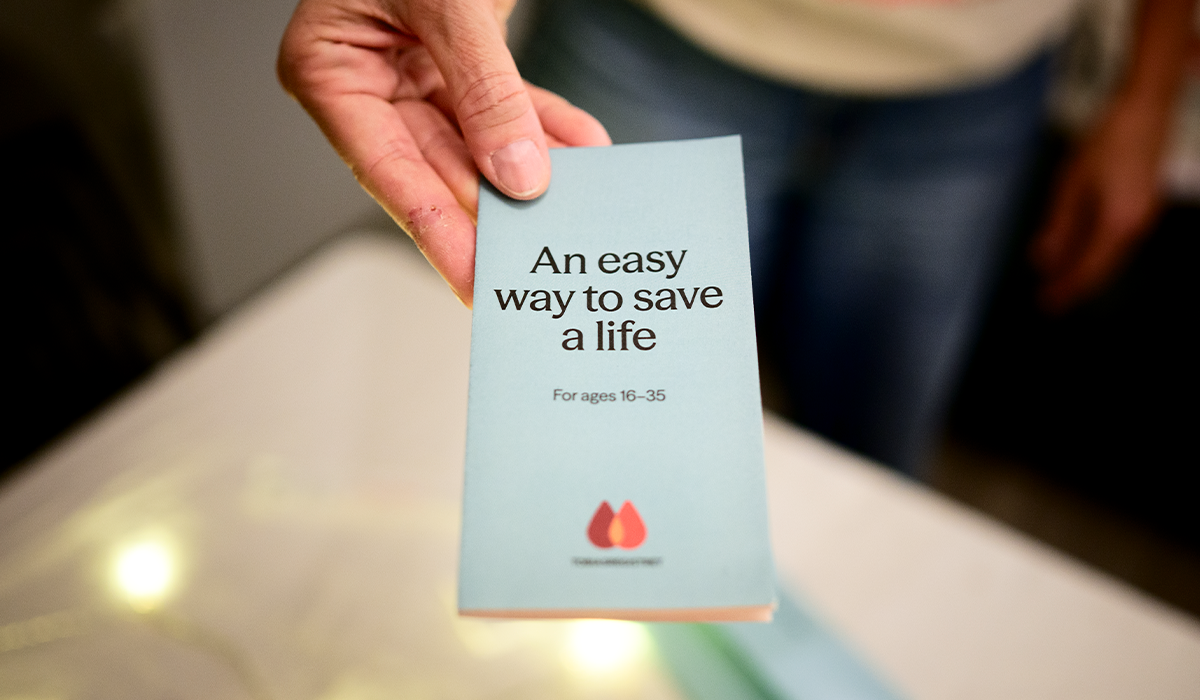
On the name’s day of Tobias, the 2nd of November, Kuratorskollegiet collaborated with Tobiasregistret to organize a sign-up event to increase donor registrations of young people – an initiative supported by Kalmar’s nation who agreed to host the event.
– Every year we try to have different events, and this year we decided to be present in 6 cities across Sweden where university hospitals directly collaborate with us for donations, Kajsa Hammarström, organizer of the event and international coordinator, lets us know. The event had up to 30 students attending.
– It’s a smaller venue, so it’s harder for people to just pass by and become aware. But the people who showed up today have been very dedicated. Everyone that showed, joined the registry, says Kajsa Hammarström.
But what is required for a stem cell donation? Generally, donations from young, healthy people are preferred, in order to increase patients’ chances of a good health outcome.
– The blood group doesn’t matter, actually, as the new stem cells control the production of the blood. The receiver’s blood type changes to the donor’s type after donation if they weren’t identical before, Kajsa Hammarström explains. When a patient is in need, the registry is checked for genetic similarity between patient and donor cells. To make registration easy, the event offered swab-kits for new members to collect cells from the inside of their cheeks.
– It’s a DNA test. The swabs dry out and the DNA is extracted later on for analysis, Kajsa Hammarström explains. Faulty swabs are rare, and in such cases, members are simply sent a new kit to redo the test. A match can be made within Sweden or abroad, but if one is made, the donation will always take place in a Swedish hospital.
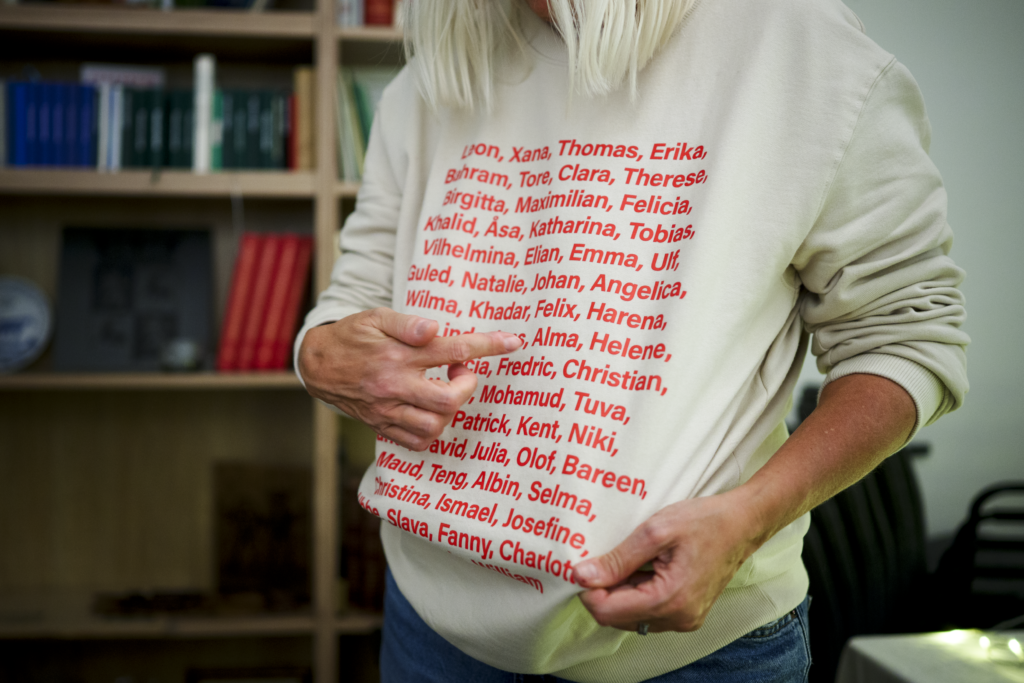
To learn more about the experience of a stem cell donor, we talked to Pelle, who donated blood stem cells back in 2022. Inspired by his mother who has worked with children’s oncology, and who first told him about Tobiasregistret, Pelle decided to sign up and join the registry. Not long after, he was contacted for a potential donation.
– It was actually an email, and it was a special feeling, of course, he says.
Once the registry obtained his positive response, medical appointments were arranged at his local hospital to examine Pelle’s health to confirm the match. About 5 days before the donation is made, donors are instructed to take G-CSF injections to increase the levels of stem cells circulating in the blood.
– It’s quite a strange feeling giving yourself injections, but it was an easy thing to do. I got great instructions on how to do it and for me it was eight injections, Pelle says.
The injections can give rise to side effects such as fatigue, headaches or muscle aches. Pelle explains that he only experienced skeletal pain as a side effect, as that is the location of the stem cell production.
During his donation, Pelle’s blood got filtered through a machine to remove stem cells from it, before returning the blood back to him.
– I was very relaxed when I was there. You don’t have to do much, so I don’t think you really notice it that much, says Pelle.
– I think my entire blood volume went through the machine about five times, he continues.
After the donation, Pelle had the possibility to contact Tobiasregistret about the patient that received his cells.
– About seven or eight months after I donated, I got to know that the patient was actually still alive. That was very impressive and special.
Today, Pelle is studying medicine at Lund University. The experience of donating stem cells broadened his medical perspective.
– The process in itself is so simple compared to what the person on the receiving end is going through and it’s a very fascinating thing to be in the healthcare system as a donor, Pelle explains.
There are 43 million potential donors registered worldwide in over 100 different registries, the Swedish registry makes up only a small part with 280.000 people. Every year, between 300 and 400 stem cell donations take place in Sweden via Tobiasregistret. To increase awareness in Sweden, Tobiasregistret collaborated with its volunteers from Lund to found ”Tobiasregistret Studentföreningen LU”, an official subdivision of Sweden’s registry, in June 2026. Astrid Bengtsson first joined the registry as a volunteer when her childhood friend was diagnosed with leukemia. Today she is head of Tobiasregistrets student organization.
Inspired since by the need to help patients, she explains how the student organization was founded.
– We are looking for people aged 16-35, and that’s the student’s age range.
The main goal is to raise awareness and present opportunities for people to join the registry. Future events are already being planned, with swab-kits available on-site to make joining as simple as possible. The association is still growing, with students coming to the events and following their social media. Astrid wants her fellow students to be aware and mindful of the fact that there are people affected by debilitating illnesses.
For Pelle, raising awareness is an important part of the event.
– Of course it’s very rewarding to have donated, but the most rewarding thing is hearing about someone else actually joining the registry, he says, describing the key purpose of the event.
– The more people that are in the registry, the better the chances are that a match can be found, Pelle concludes.