
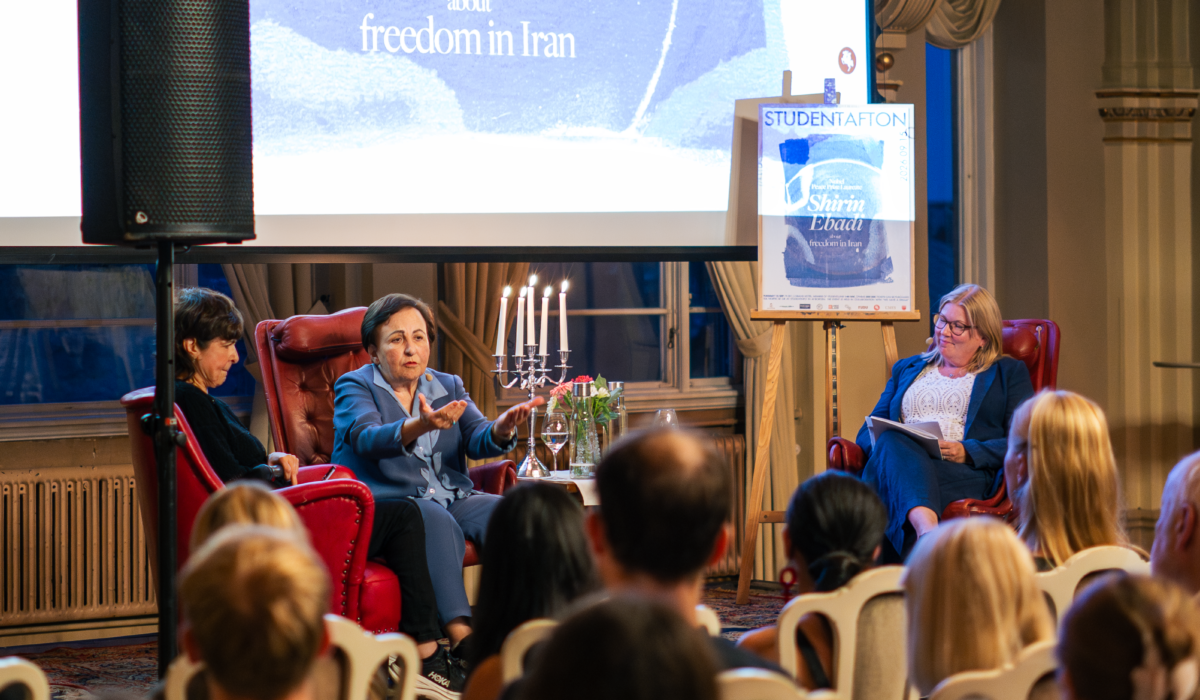
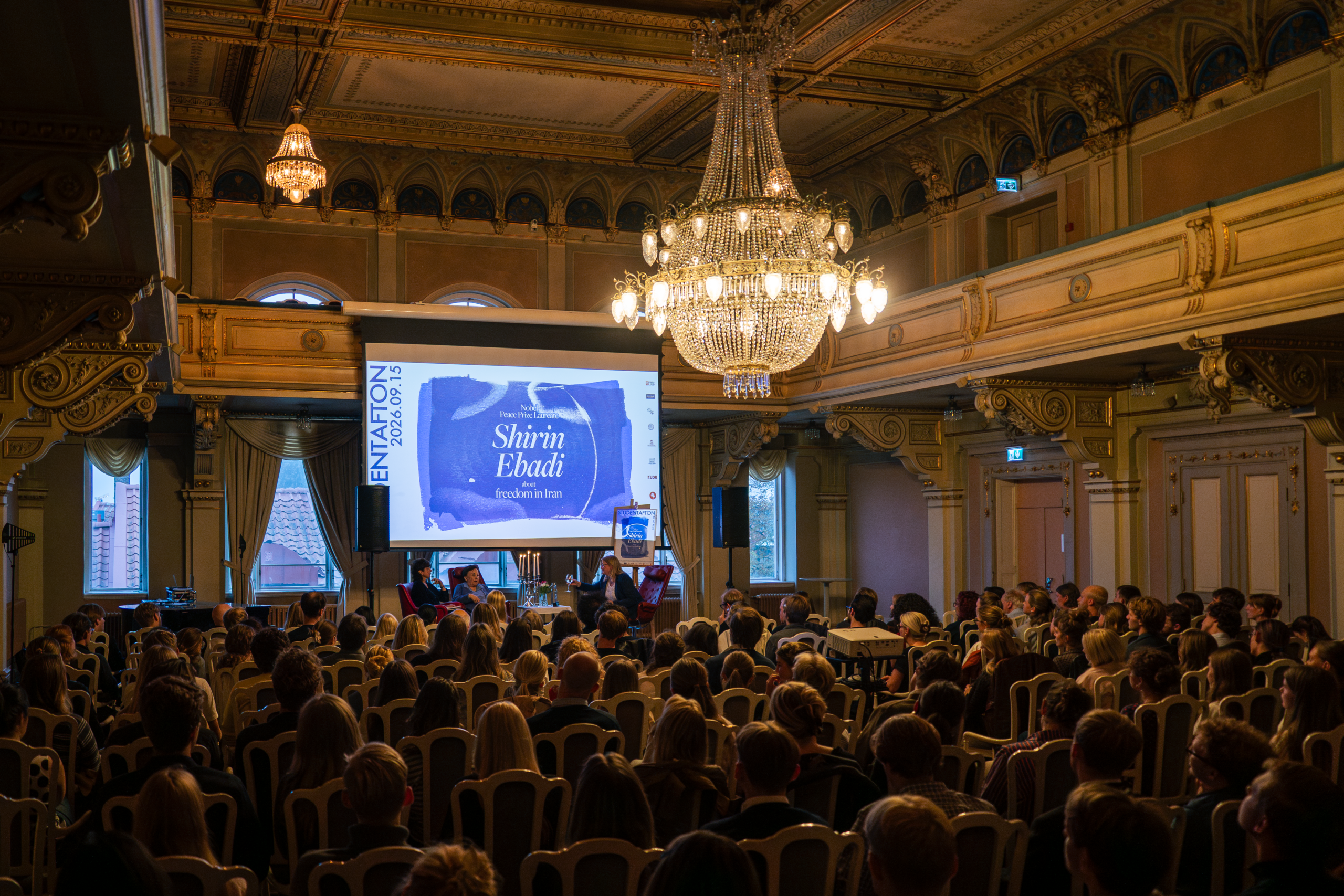
Twenty minutes before the start of Tuesday’s Studentafton, the mostly young audience start filling the elegant auditorium of the Grand Hotel. When the light turns off and the Studentaftons video introduction begins to play, the chatter that had previously echoed through the hall stops instantly.
Oscar Falk, president of the Studentafton committee, welcomes the speakers. After applause, Shirin Ebadi pours professor Lisa Strömbom a glass of water, the audience waits quietly for the evening to beign.
Strömbom welcomes the audience by thanking the students for being there. She immediately connects with those listening by emphasising the importance of their presence.

– At a time where democratic values are challenged, the engagement, curiosity and courage of younger generations matter – maybe more now, than ever.
The main guest of the evening is Dr. Shirin Ebadi, one of the most prominent voices for peace, rule of law, human and women’s rights, and an advocate for a democratic Iran. As the first Iranian female president of Teheran’s city court and Nobel Peace Prize Laureate, Ebdi is a well known figure in the fight for democracy and human rights globally.
The first topic of the evening is Ebadi’s experiences. When Professor Strömbom asks about the influences shaping her work, Ebadi points to her progressive Muslim upbringing. She recounts how her father raised his sons and daughters as equals.
– My father was very liberal and very progressive, he was a true feminist! she says.
Shirin Ebadi tells the audience about how she became Iran’s first, and till this day youngest, female judge, and later in 1975 court president. However, after the islamic revolution in 1979 women lost their rights.
– All the rights I used to enjoy as an Iranian woman, I lost them all – within 24 hours.
The revolution did not, however, fully ban women from practising the law, and Ebadi opened her own law firm after the revolution. She describes working for human rights and accepting many cases pro bono, in a dangerous political climate that prosecuted many human rights lawyers, including herself.
– I myself experienced imprisonment. Many human rights lawyers in Iran ended up behind bars.
Shirin Ebadi speaks in Persian, and is translated by an interpreter during the evening. The translation adds authenticity while introducing another layer, where meaning can shift.. Although the interpreter conveys the emotions well, it is not the same as hearing and understanding Ebadi directly. At the same time, there is value in hearing her speak in her native language. The translation takes time and the room often falls silent as the audience awaits for the translated response. This reduces the moderator’s role and makes the evening feel more like a presentation than a dynamic dialogue.
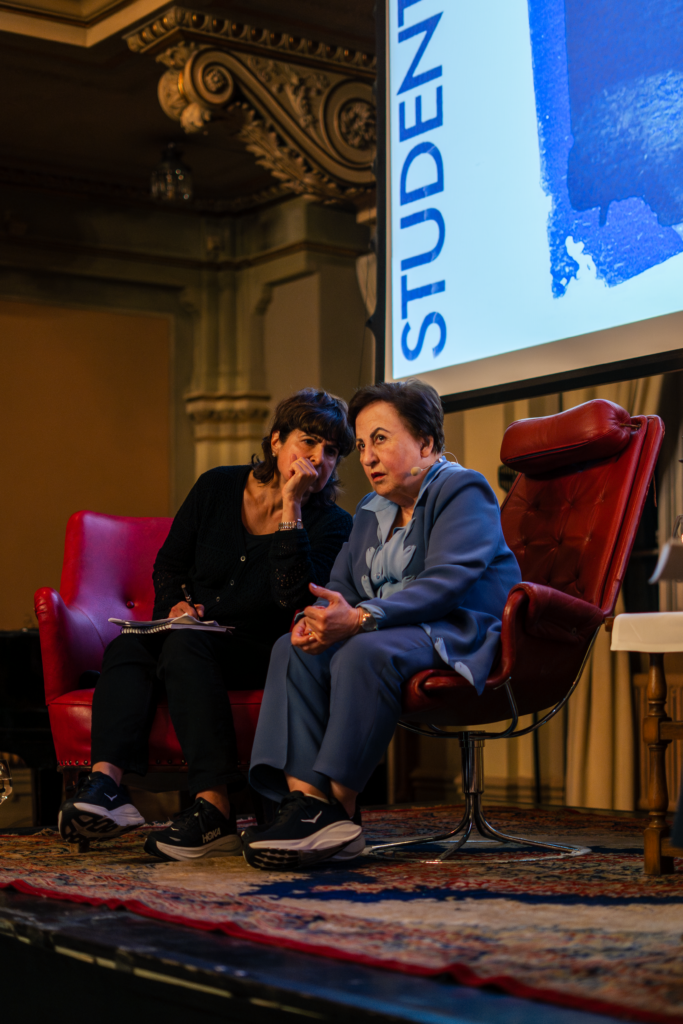
The evening shifts focus to Shirin Ebdabi’s Nobel Peace Prize, which she won in 2003. Ebadi dedicated much of the prize money to her law firm and co-founded Defenders of Human Rights Center, an organisation that used to offer pro bono legal representation to political prisoners and their families. Today it focuses on advocating for democracy and human rights.
Ebadi continued to work until 2009, when the political climate in Iran forced her to leave. She decided to stay abroad while continuing her work for human rights in her home country.
– I could be their voice, I could be a loud speaker for them, I could be a platform for their representation outside the country, Shirin Ebadi explains.
When asked who her role models are, Ebadi answers that while she is inspired by her calm father, she is not like him.
– I am far from being a calm person, I have a very loud voice, and I do not keep quiet! she says, and the audience laughs.
Shirin Ebadi says that today she does not seek role models, and addresses the audience directly:
– Be yourself, have your own dreams and follow them.
Strömbom guides the conversation towards Iran’s current political climate, mentioning the protests in January and the ongoing armed conflict with the U.S. Ebadi argues that Iran’s development over the past decade, including the military buildup, recruitment of regional proxies like Hezbollah and the Iraqi militia, and rich natural resources, have all aided in building a Shiite empire. According to Ebadi, the development is stunningly contradictory.
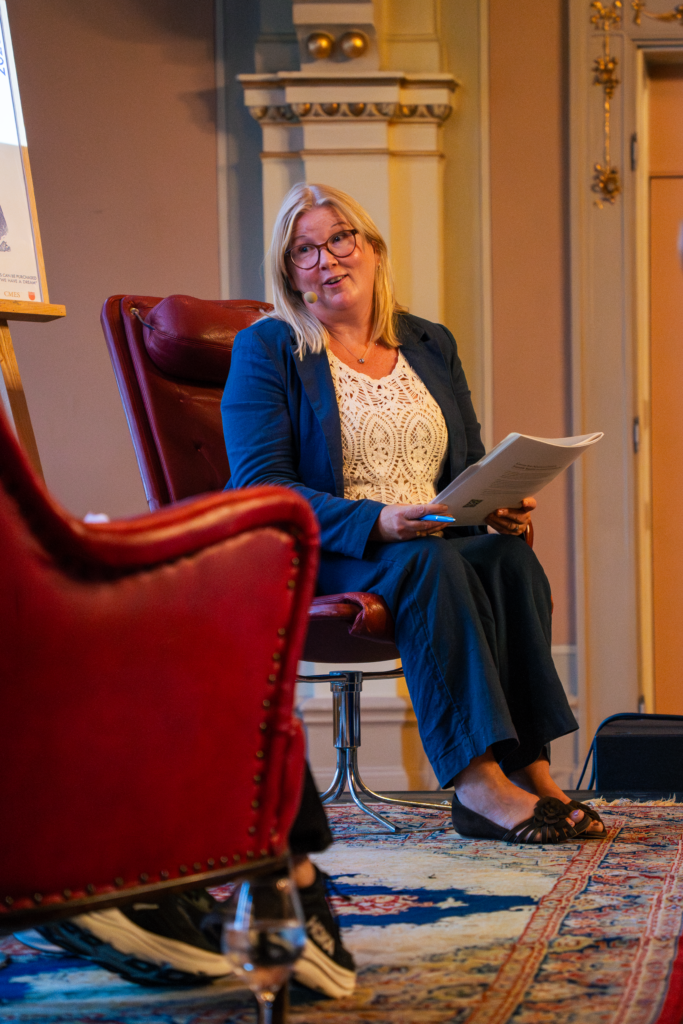
– Iran is a rich country yet over 80 percent are living under the poverty line.
The activist describes how protests are forcefully suppressed by the government in Iran, with thousands arrested or killed, and hundreds awaiting execution. Ebadi notes that the Iranian government fears internal uprising more than it does the U.S., which prompts Strömbom to ask about the prospects for a free Iran. Ebadi locks eyes with the audience, and says that Iranians unanimously want democracy and secular rule.
– Everything has a price, and to achieve something, you have to pay that price. The same applies to democracy and freedom – we will achieve it. Iran has a very courageous young generation, Gen Z is willing to accept imprisonment for the sake of victory.
Lisa Strömbom dives deeper into Iran’s future. Shirin Ebadi calls out European states for strengthening the current Iranian regime for economic gain. Using Sweden and Belgium as examples, she notes that both states have released Iranian criminals in exchange for their own citizens. Her directness and uncompromising tone ring throughout the room.
– Stop helping the Iranian regime! she urges.
– Achieving democracy is our duty, the duty of the Iranian people. All we ask of you is not to strengthen the regime.
After the moderated portion of the evening ends, the audience takes over with questions. When asked why she thinks people support Irans regime, Ebadi explains that some young people are drawn to the regime through pro-Palestinian propaganda, and questions whether it has actually improved Palestinian’s situations. Another person asks whether negotiations between European states and Iran or Afghanistan are valuable. Shirin Ebadi answers that they can be, but stresses that women’s voices must be included, otherwise negotiations do not provide much value.
– You don’t hear them in the media, you don’t hear them anywhere.
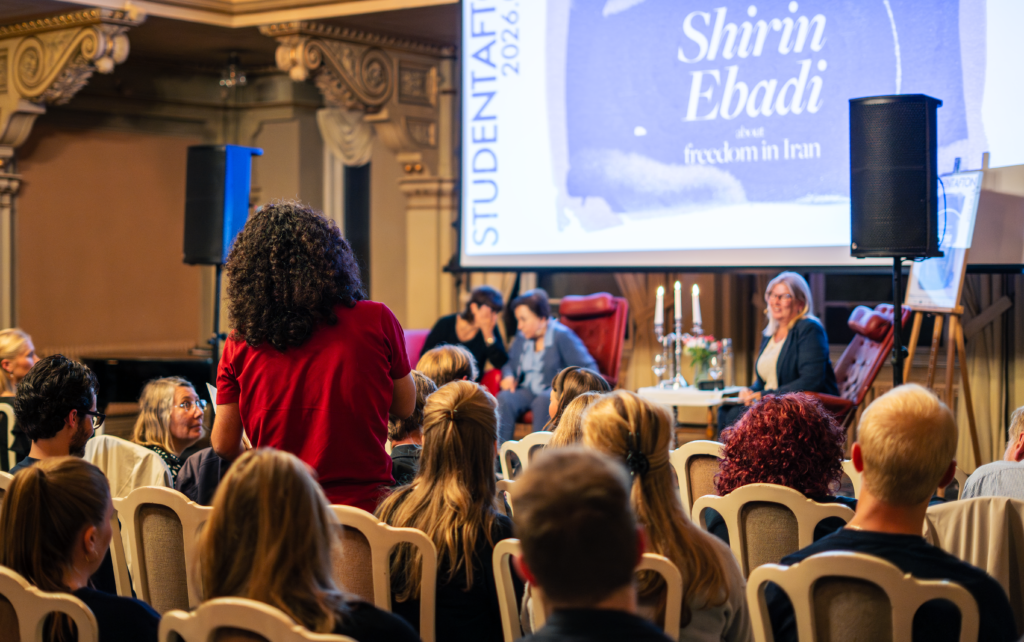
She concludes by arguing that women’s oppression in Iran is rooted in islamic beliefs, emphasising her support of secularism.
– I am not against religion, I believe religion should be personal, not imposed on people.
After the questions, the time is up and the evening concludes with a long applause. After photos of the speakers are taken, I get the chance to ask Shirin Ebadi what she would like to emphasise after this evening. She answers shortly:
– Europe must not strengthen the Iranian regime!
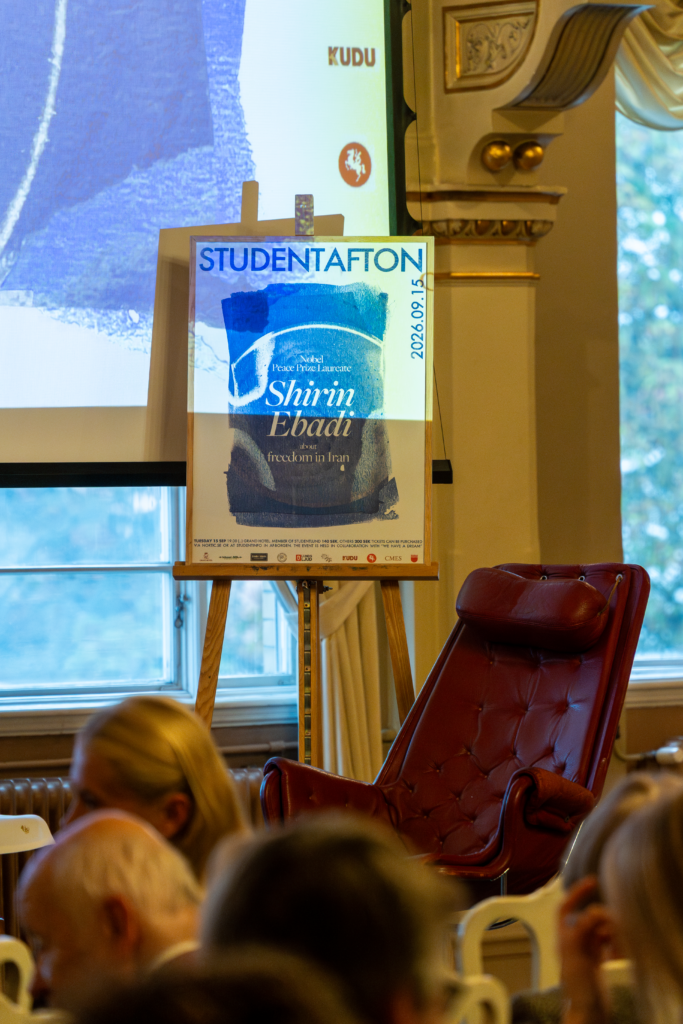
As the guests are leaving the room, I catch Arad Alesafar, a student at Lund University, who tells me that he is grateful to have heard Shirin Ebadi speak. He says that he was moved by how many European and Swedish students were in the audience.
– It grabbed my attention that the young generation cares about what’s happening in Iran.
I leave the hall feeling inspired by this well-renowned woman. What stands out to me is her resilience to keep fighting and remain a loud voice for the people of Iran. Though the evening has addressed many of Shirin Ebadi’s personal and professional experiences, it does not feel like enough time with the Nobel Peace Prize laureate.